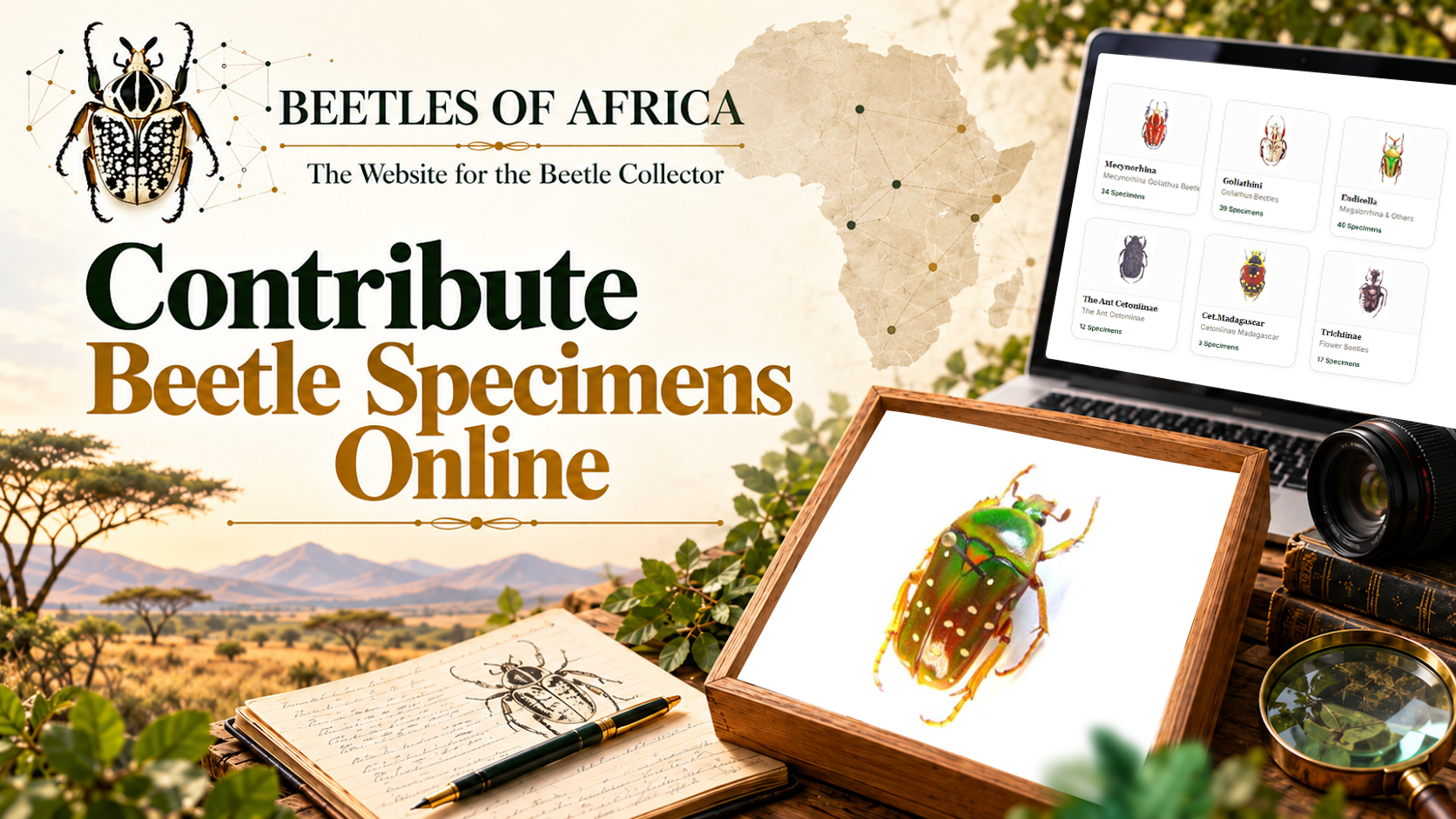
To contribute beetle specimens online means sharing specimens, photographs, or field notes with a public collection that organizes them for others. Beetles of Africa, curated by Colin R. Owen, invites exactly this. Its contribute page asks visitors to reach out through the contact page with what they would like to share.
Doing so strengthens a digital insect collection archive, a searchable record that outlasts any single cabinet or drawer. Colin plans to put his entire collection online, along with the photographs he has taken and will take.
Why a Private Drawer Is Not Enough
Private collections serve one person. Public ones serve everybody who searches them. Digital records also survive what drawers cannot, such as faded labels, house moves, and failing memory. Guidance for museums from National Museums Scotland makes the point plainly: data is no less important than the specimens themselves, and without knowing where and when a specimen was collected, its scientific value is very limited.
The same guidance adds that only digital data can be easily used and shared. That is the quiet case for putting finds online.
Data is "no less important than the specimens themselves."
What Makes a Contribution Useful
Four details carry most of the value. Museums call them the what, where, when, and who of a specimen. Each one answers a question that a future researcher will ask. Even partial data helps, since a family name, a country, and a year already beat a bare pin with no label.
| Detail | Why it matters |
|---|---|
| What | The best identification available, even if only a family |
| Where | Country, region, exact locality, and coordinates when possible |
| When | The date of collection, which is often the missing piece |
| Who | The collector, so the record can be credited and verified |
A Lesson From the Natural History Museum
In 2024, researchers at the Natural History Museum in London digitized about 29,000 pinned ground beetles of the subfamily Lebiinae. The records covered 2,546 species, around 40% of the known total.
Location data was available for 91% of identified specimens, yet collection dates for only 39.8%. The authors concluded that historical labels are a useful baseline for tracking biodiversity change. Every missing date makes that baseline thinner.
Age matters here too. Species collected early were often represented by many specimens but lacked recent records, while those collected after 1950 were mostly single specimens. Fresh, well-documented finds help fill that gap.
Getting Ready to Share
Good habits start in the field. Write the locality and date at the moment of collection, and give each specimen its own number. Unique identifiers are vital for keeping notes, photographs, and records linked.
If a name is updated later, keep the earlier identification beside the new one. Museums do the same, recording who changed the name and when. Georeferencing, the step of turning a place name into coordinates, then lets a record sit exactly where it belongs on a map.
What Contributors Can Send
Beetles of Africa asks for specimens, photographs, and field notes. Clear photographs from above and from the side help most, and a short note on habitat, host plant, or elevation adds context nothing else can supply. Photographs of live beetles in their habitat also show color and posture that pinned specimens lose.
Colin has said photographing everything will take time, especially the very small beetles. Sharp images of tiny species are a natural place for a collaborator to help. Anyone ready to contribute beetle specimens online can start with a message through the contact page.
Voices From the Field
"always had a wonderful time collecting all these beetles and moths."
"Contribute your specimens, photos, and field notes to a global resource."
A Shared Record Keeps Growing
Colin grew up on mission stations in what was then Northern and Southern Rhodesia, a setting with little to do but go out and study nature. Night lamps there drew beetles from the dark, and a collection began. His curiosity reaches beyond collecting. He favors less chemical and more biological insect control, which depends on knowing "our allies and our enemies." Today that same curiosity lives in a catalog of 949 specimens across 48 families.
Every well-labeled contribution makes that catalog more useful to the next collector. Share what you have, record where you found it, and let the archive do the rest. When enough collectors contribute beetle specimens online, a single person's passion becomes a shared reference for everyone.